Okinawa black tea in Shibuya
Kanigawa Seicha’s limited Shibuya appearance points to a more useful story: Nago, Yanbaru climate, postwar tea planting, cultivar choices, and black tea read as a place product.
By Matt Ketchum, founder and editor
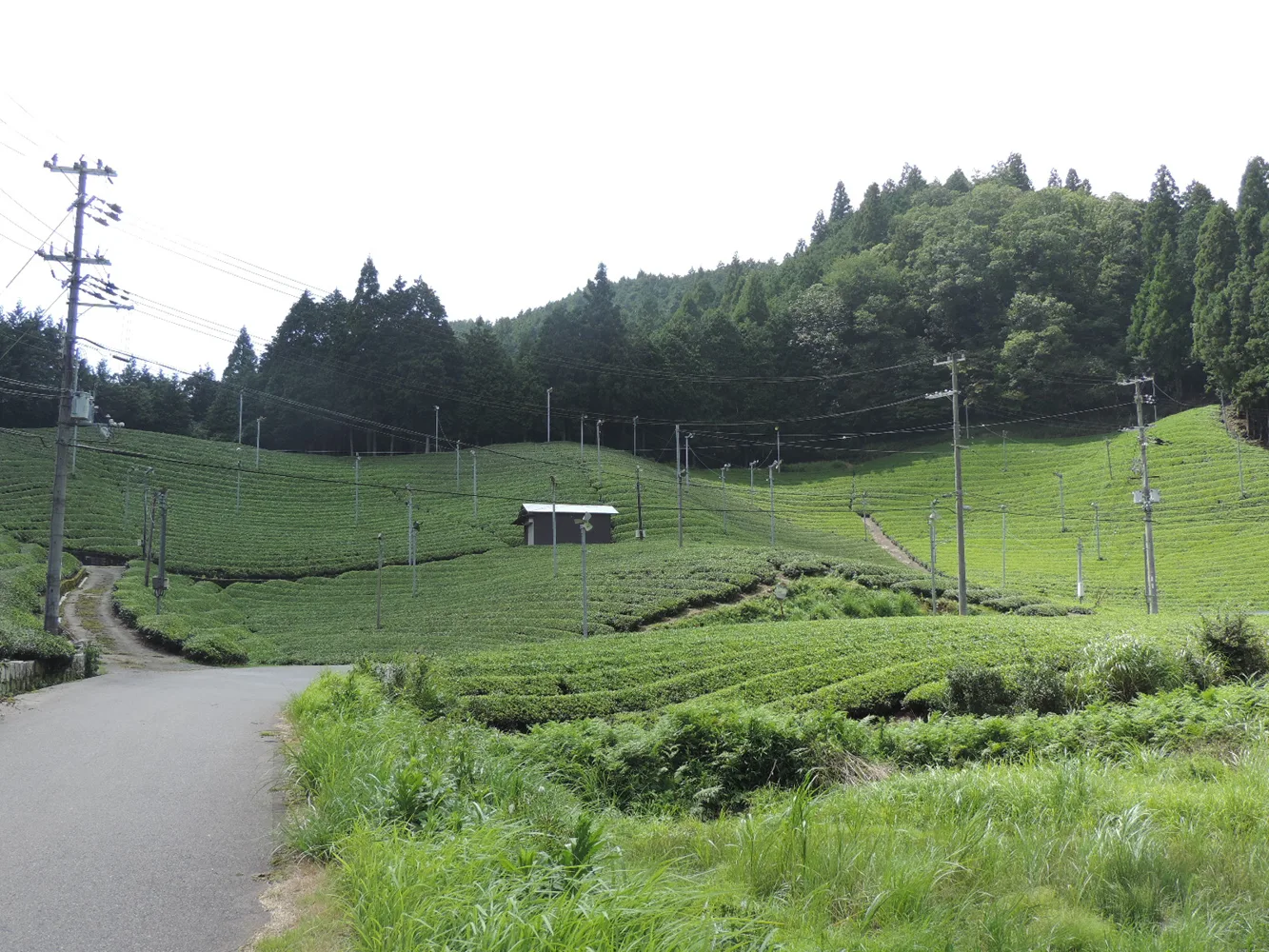
Image credit: Tea plantation in Asamiya by 運動会プロテインパワー, CC BY-SA 4.0
What is the Shibuya release about?
The June 16 release says Kanigawa Seicha’s Okinawa black tea will appear in a limited Mochinyan collaboration at Seibu Shibuya from July 1 to August 3, 2026. That is the visible hook: a character package, a department-store event, and a small route for Tokyo buyers to taste a tea they probably do not see often.
The more useful story sits behind the package. Kanigawa Seicha is described as a Nago, Okinawa tea farm founded in 1956, with roots in what was then Haneji Village. The release says the family planted seed brought from Taiwan, built its own tea factory around 1960, made pan-fired green tea, and later shifted under the fourth generation toward black tea as the main product.
How does Okinawa change the cup?
Okinawa tea does not sit on the usual shincha map. Nago sits in the island’s north, near Yanbaru’s humid, subtropical landscape rather than the colder inland tea fields many buyers picture when they hear Japanese tea. The release frames the tea around warm climate, local nature, and cultivars selected for aroma.
The blend named in the release is practical information: black-tea cultivars Benifuki and Benihomare are used with green-tea cultivars Yabukita and Yutakamidori. That gives a buyer something to ask about. Is the cup floral, honeyed, light, brisk, or built for milk? Is it better as hot tea, iced tea, or beside sweets? Those are service questions, not mascot questions.
What do buyers ask about this tea?
For shops and restaurants, the Shibuya sample is an origin lead. The buying questions are harvest timing, cultivar ratio, oxidation style, pack size, storage guidance, and whether loose leaf and tea bags behave differently in service. If the answer is clear, Okinawa black tea can sit on a menu as a place product rather than a novelty from the south.
Small tea stories matter when they lead back to a place a kitchen can name. Locality-specific Japanese tea becomes useful when the producer, field context, processing, and buying route are visible. A collaboration can open the door, and the door leads back to Nago, the tea bushes, the factory, and a cup that staff can explain without hype.
Go deeper
- Ise tea beside food: Tea service note
- Hiroshima zairai tea: Tea note
- Japanese tea flavor for food: Tea guide
Sources and further reading
- Release on the Seibu Shibuya limited Mochinyan x Kanigawa Seicha Okinawa black tea package: D-Visual / PR TIMES (JA)
- Kanigawa Seicha official site: Kanigawa Seicha (JA)
Related video / media
- Illustration: Tea plantation in Asamiya: Wikimedia Commons (EN)
Need a sourcing check?
Send the specific context behind your decision. A free inquiry checks fit; the paid sourcing assessment works through one concrete question.